


Why Ecommerce Growth Is Moving Beyond Paid Ads Toward Owned Marketing

For a long time, ecommerce growth felt mechanical. Increase ad spend, acquire more customers, and revenue followed. The simplicity of that equation made paid media the default engine for scaling online stores.
Today, that model is under pressure. Rising CPMs, volatile performance, and growing platform dependence have forced brands to re-evaluate what sustainable growth actually looks like. The challenge is no longer whether advertising works, but whether it works well enough on its own.
This is why more ecommerce teams are shifting attention toward owned marketing—email, SMS, and customer data infrastructure—where growth compounds over time instead of resetting with every campaign. Platforms like Klaviyo have become central to this shift by helping brands turn customer relationships into long-term revenue assets.
The Reality Behind Rising Ad Costs
Paid advertising has not stopped working. What has changed is the margin for error.
As platforms mature, competition intensifies. More brands bid for the same attention, algorithms reward consistency over experimentation, and small inefficiencies quickly erode profitability.
For many ecommerce operators, the warning signs are familiar:
- Customer acquisition costs rise faster than average order value
- Scaling budgets no longer produces linear revenue growth
- Performance becomes sensitive to external changes beyond the brand’s control
When traffic was inexpensive, these issues were tolerable. Today, they expose a deeper problem: growth that depends entirely on paid media does not accumulate value. Each dollar spent delivers results once, then disappears.
Why Ad-Driven Growth Has a Ceiling
Advertising is transactional by design. A user clicks, converts, and exits the funnel. Unless something captures that relationship, the brand starts from zero the next time it wants to generate revenue.
This creates a structural ceiling. Even well-optimized campaigns eventually encounter diminishing returns because acquisition costs increase while customer lifetime value remains static.
At scale, this imbalance creates three risks:
- Profitability becomes fragile and highly sensitive to ad performance
- Revenue fluctuates with budget changes rather than customer demand
- Brands lose resilience when platforms update policies or algorithms
Without a retention layer, growth slows not because demand disappears, but because efficiency collapses.
Reframing Growth Around Ownership
Owned marketing is often reduced to a channel discussion. In reality, it is a structural shift.
Ownership means controlling the relationship with the customer instead of renting access through intermediaries. Email lists, SMS subscribers, and unified customer profiles represent durable assets that grow more valuable with use.
Unlike paid traffic, owned channels compound:
- Each purchase adds behavioral context
- Each interaction improves targeting accuracy
- Each message strengthens brand familiarity
Over time, this creates leverage. Revenue is no longer tied exclusively to daily ad spend, but supported by an audience that the brand can reach directly.

Retention as the Missing Growth Multiplier
Retention is frequently positioned as a defensive strategy, focused on reducing churn or saving acquisition costs. In practice, it functions as a growth multiplier.
Returning customers tend to convert at higher rates, require less incentive, and spend more over time. Even modest improvements in repeat purchase behavior can reshape overall unit economics.
More importantly, retention smooths revenue volatility. Instead of relying on constant top-of-funnel pressure, brands generate sales from customers who already trust the product.
This predictability allows teams to plan, invest, and scale with greater confidence.
From Raw Data to Repeat Revenue
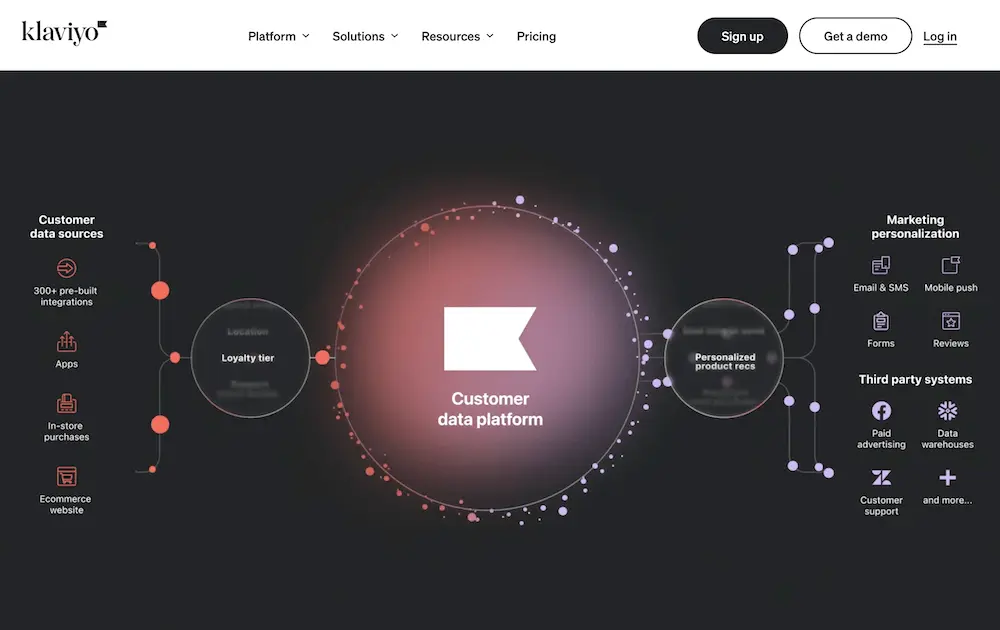
Most ecommerce brands already collect significant amounts of customer data. The problem is not scarcity, but fragmentation.
Purchase history lives in one system. Browsing behavior in another. Engagement metrics in yet another. When these signals remain disconnected, personalization remains shallow.
Unified customer data platforms like Klaviyo connect these touchpoints into a single, evolving profile.
Once data is unified, brands can move beyond generic messaging and activate behaviors such as:
- Sending product recommendations based on browsing patterns
- Triggering follow-ups after meaningful engagement
- Adjusting messaging frequency based on responsiveness
This transforms marketing from broadcast communication into adaptive conversation.

Email and SMS as a Unified Retention System
Email and SMS often appear as separate channels with distinct purposes. In reality, their strength lies in coordination.
Email supports depth. It enables storytelling, education, and detailed product context.
SMS supports immediacy. It delivers timely prompts when action matters most.
Together, they support the full customer lifecycle:
- Welcoming and onboarding new customers
- Encouraging second and third purchases
- Re-engaging inactive subscribers
- Supporting replenishment and upgrades
When automated through behavioral triggers, this system runs continuously, adapting to customer intent without constant manual execution.
Moving From Campaigns to Lifecycle Thinking
Traditional marketing calendars revolve around campaigns. While campaigns generate spikes, they do not build momentum.
Lifecycle marketing takes a different approach. Instead of asking what to send this week, it asks what the customer needs at this moment.
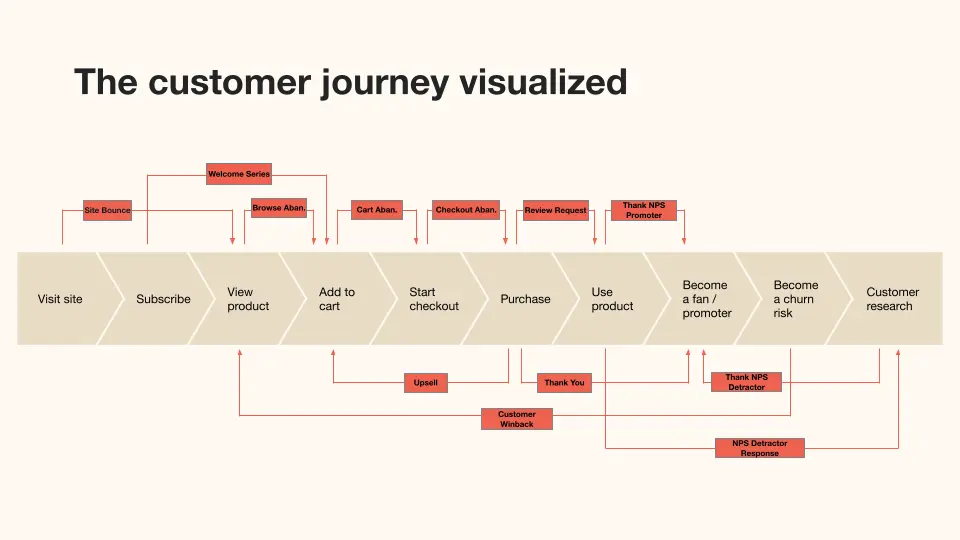
Key lifecycle stages typically include:
- First-time visitor education
- Post-purchase reassurance and onboarding
- Repeat purchase encouragement
- Churn risk intervention
Automation platforms such as Klaviyo allow brands to design these journeys once and refine them incrementally as data accumulates.
Leverage Is the Real Advantage of Owned Channels
The most significant difference between paid and owned marketing is leverage.
Paid channels demand constant input. When spend pauses, results disappear.
Owned channels appreciate in value. As subscriber lists grow and profiles deepen, each message becomes more efficient. Engagement improves. Revenue per send increases.
This does not require abandoning paid ads. Instead, ads become feeders for an owned ecosystem rather than the entire growth engine.
Why Brands Are Rebalancing Their Growth Strategy
The shift toward owned marketing is not philosophical. It is economic.
Brands that weather market volatility tend to share one characteristic: strong retention infrastructure.
They invest in systems that capture context, build memory, and strengthen trust with customers.
Email and SMS, powered by unified data and automation, are no longer optional additions. They form the foundation of durable ecommerce growth.
Final Perspective: Ownership Creates Optionality
Modern ecommerce growth is not about finding the next traffic source. It is about building optionality.
Brands that own customer relationships can adapt faster, experiment safely, and scale with confidence.
By transforming customer data into retention-driven revenue, platforms like Klaviyo help ecommerce businesses move beyond ad dependency.
In an environment where attention is rented and loyalty must be earned, owned marketing is not just a safer path forward. It is a smarter one.