


Klaviyo for Ecommerce: Build a Retention Engine with Email + SMS

Email is still one of the highest-leverage channels in ecommerce—when it behaves like a system. The difference between “sending newsletters” and “building retention” is timing, relevance, and automation built from customer behavior. That is the core reason many teams adopt Klaviyo: it treats your store’s events (browse, cart, checkout, purchase, repeat purchase) as the fuel for messaging that feels personal.
In this guide, you’ll learn what Klaviyo is, how it works, what features matter most, which flows to launch first, and how to build a segmentation playbook that increases repeat purchases without over-emailing your list.
1) What Is Klaviyo?
Klaviyo is an ecommerce-focused marketing automation platform built to turn customer data into personalized email and SMS. Instead of relying on generic campaigns, it lets you trigger messages from real actions: viewing products, adding to cart, starting checkout, purchasing, returning, and browsing specific categories.
That’s why Klaviyo is often used for lifecycle marketing: welcome sequences, cart recovery, post-purchase education, review requests, VIP journeys, and win-back flows. The end goal is simple—more repeat purchases and stronger lifetime value—without needing complicated engineering work to get started.
2) Why Klaviyo Works So Well for Ecommerce
Most stores do not need “more emails.” They need better targeting and better timing. Klaviyo’s advantage is that it is designed around commerce behavior, which makes personalization practical rather than theoretical.
Behavior is the trigger, not just a contact field
In ecommerce, customer intent changes quickly. Someone can be a browser today and a buyer tomorrow. Klaviyo’s event-based approach helps you respond to intent when it is highest—without sending the same message to everyone.
Segmentation is the real multiplier
Relevance comes from sending different messages to different people. With segmentation, you can treat customers like groups with distinct motivations—rather than one list.
- VIP and high spenders vs discount-driven buyers
- first-time customers vs repeat customers
- recent purchasers vs inactive profiles
- category-based buyers (skincare, accessories, fitness, home, etc.)
Automation creates compounding results
Flows do not replace strategy; they operationalize it. Once a flow is built, it keeps running and improving. Many stores see the strongest impact from:
- recovering abandoned cart and checkout drop-offs
- guiding customers after purchase so they get results fast
- re-activating customers before churn becomes permanent
SMS can boost conversions, but only with restraint
SMS works best as a high-intent channel, not a daily broadcast. Used carefully, it complements email: SMS nudges action, while email educates and deepens the relationship.
3) The Ecommerce Features That Actually Matter
Platforms can list dozens of capabilities, but only a few consistently drive revenue. These are the features most worth your attention.
High-converting sign-up forms
Klaviyo supports popups and embedded forms for list growth. The difference between “a popup” and “a profitable signup system” is intent:
- lead with a benefit (guide, bundle, value promise), not only a coupon
- ask for fewer fields upfront to reduce friction
- collect preferences later through short follow-ups
A flow builder for lifecycle automation
Flows are where ecommerce email becomes a predictable system. The flow builder lets you design triggered journeys that fire from customer actions, which reduces the need for constant manual campaign planning.
Behavior-based segmentation (the highest ROI type)
The most valuable segments are not demographic. They are behavioral and intent-driven:
- viewed a category multiple times but did not purchase
- added to cart and abandoned
- purchased twice in 60 days
- high AOV customers who respond to launches
- customers who buy only with discounts
Insights that support retention planning
Retention improves when you can identify who is likely to reorder, who is drifting toward inactivity, and which customers deserve VIP-style treatment.
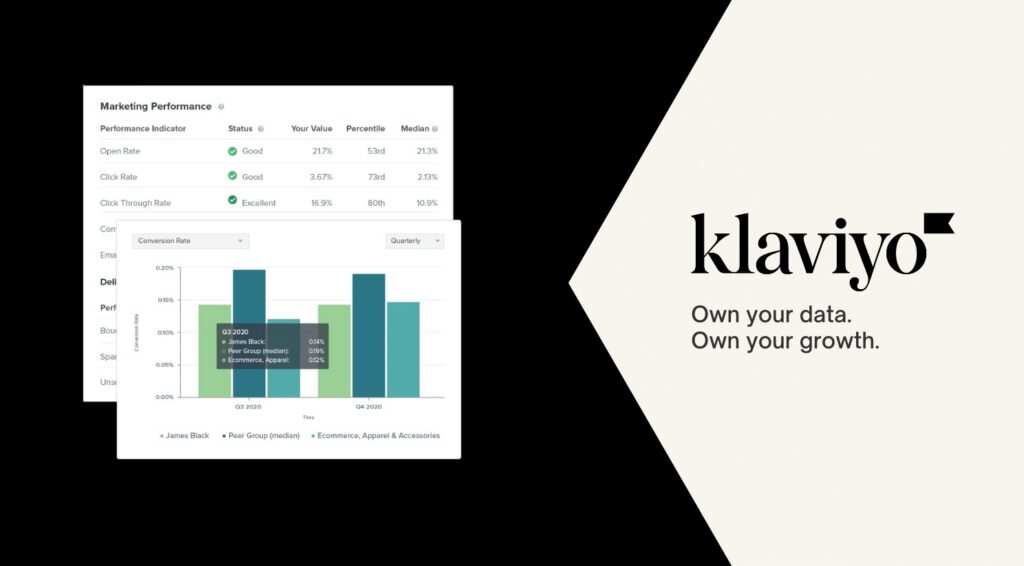
Reporting that ties messages to revenue
Useful reporting answers practical questions:
- Which flows produce the most revenue per recipient?
- Which segments convert best (and why)?
- Are second purchases increasing over time?
- Which categories create the most repeat buyers?
4) The First Flows to Launch (A Simple Starter Roadmap)
If you are starting from scratch, do not build everything at once. Start with flows that create compounding retention, then add complexity later.
Flow #1: Welcome series (subscriber → first purchase)
The welcome flow often becomes your highest-leverage automation because it turns new subscribers into buyers. A practical structure:
- Email 1: brand promise + what makes you different
- Email 2: best sellers / “start here” recommendations
- Email 3: social proof (UGC, reviews, results)
- Email 4: a light nudge or incentive (only if needed)
Keep the tone human. The objective is trust and clarity, not pressure.
Flow #2: Abandoned cart + checkout follow-up
Recovery works when it resolves hesitation, not when it shouts urgency. A reliable sequence:
- Message 1: reminder with a direct link back
- Message 2: benefits + answers to common objections
- Message 3: social proof or a gentle offer (optional)
Flow #3: Post-purchase education (first order → second order)
Post-purchase is where retention is built. Your goal is to help customers get results quickly, because results create confidence. Depending on your product category, include:
- setup or usage guidance
- care instructions and best practices
- what to expect (timelines, common questions)
- recommended add-ons that improve outcomes
Flow #4: Review request
Reviews improve conversion, but they also increase customer attachment. Ask when customers have had enough time to experience the product.
Flow #5: Win-back (inactive → reactivated)
Win-back is about relevance. Segment by inactivity windows (30/60/90 days) and send messages that feel curated:
- “new in your category” recommendations
- best sellers with updated proof
- an incentive only if you must
Many teams choose Klaviyo because these flows are straightforward to build, test, and iterate without stacking extra tools.
5) Segmentation Playbook: Start with 5 Core Groups
Segmentation is where retention becomes scalable. The goal is not hundreds of segments; it is a small set that covers most of your revenue. Here are five that are easy to start with.
VIP / high spenders
Goal: protect lifetime value and deepen loyalty.
- early access to launches
- VIP bundles that feel premium (not discount-heavy)
- behind-the-scenes or founder-note style emails
First-time buyers
Goal: drive the second purchase (the most important retention milestone).
- post-purchase guidance + “what’s next” recommendations
- small second-order nudge (if needed)
- usage stories that build habit and belief
Inactive customers
Goal: reintroduce relevance without sounding desperate.
- curation by category
- best sellers + refreshed proof
- product improvements or “new version” messaging
Category-based buyers
Goal: personalize offers around real preferences.
- education content tied to the category
- cross-sells that solve a related problem
- seasonal recommendations that make sense
Discount-sensitive shoppers
Goal: preserve margin while still converting.
- reserve incentives for high-intent moments (cart, win-back)
- use bundles and value framing instead of constant markdowns
- avoid training them to wait for discounts
6) What to Track Weekly (So You Actually Improve)
Retention systems only work when you measure and iterate. Keep tracking simple and consistent.
Start with flow metrics
- welcome flow: subscriber-to-buyer conversion
- cart recovery: recovered revenue and click-through rate
- post-purchase: second purchase rate and time-to-second order
- win-back: reactivation rate by inactivity window
Then monitor campaign consistency
- deliverability and engagement trends
- segment-level revenue per recipient
- category-level response patterns
Easy optimization wins
- rewrite subject lines for clarity and curiosity
- shorten emails and improve scannability
- adjust timing based on customer actions
- test one variable at a time
7) Mistakes That Quietly Kill ROI
- Promotions without value: if every email is a sale, attention drops fast.
- No post-purchase system: customers who do not get results do not return.
- One-message-fits-all: generic campaigns underperform for every segment.
- Discount dependency: overuse weakens brand trust and margin.
- Deliverability neglect: list health and engagement determine inbox placement.
FAQ
Is Klaviyo only for large brands?
No. Smaller stores can start with three core flows (welcome, abandoned cart, post-purchase) and add deeper segmentation later.
Should I start with email or SMS?
Email first for education and lifecycle depth. Add SMS selectively for high-intent moments and keep frequency low.
How many flows do I need at the beginning?
Three is enough to start: welcome, cart recovery, and post-purchase education. Add review requests and win-back once those are stable.
How do I increase repeat purchases most quickly?
Prioritize post-purchase education, category-based recommendations, and a simple win-back program. If you use incentives, keep them light and targeted.
Do I need advanced segmentation to see results?
No. Even 4–6 core segments can outperform a single generic list by a large margin.
Final Thoughts
Klaviyo performs best when you treat retention like a system: welcome, recover, educate, retain, and win back. Start with the flows that matter, measure them weekly, and improve one part at a time instead of rebuilding everything constantly.
If you want an ecommerce platform where segmentation and automation feel practical—not overwhelming—you can explore Klaviyo as your lifecycle engine and scale from a few high-impact flows into a mature retention program as your store grows.
Building retention revenue with Klaviyo becomes far easier when you combine behavior-driven segments, high-performing flows, and clear reporting—then strengthen results with better onsite messaging, social proof, and a customer journey that turns first-time buyers into confident repeat customers.